


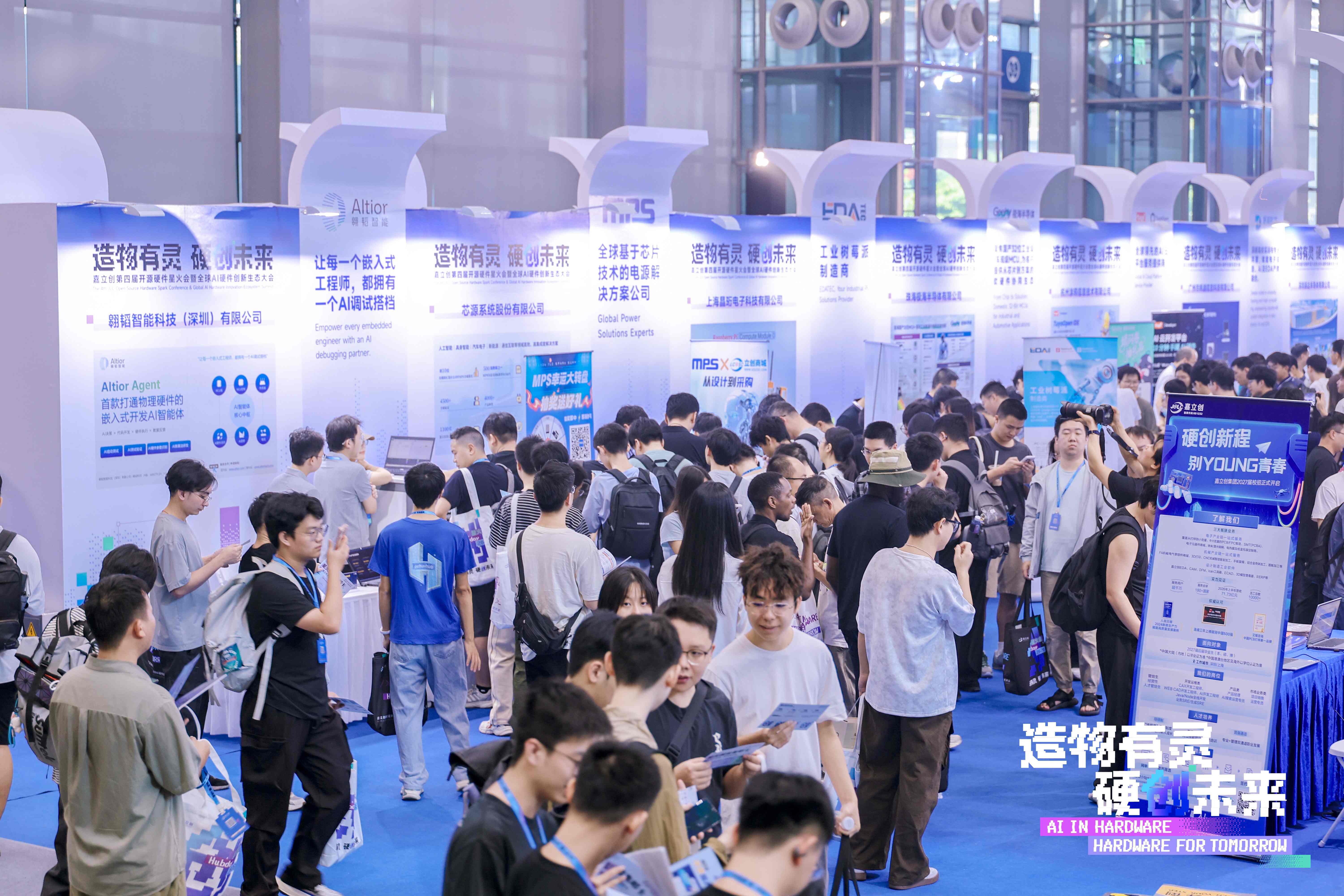
On September 19, the 4th JLC Open Source Hardware Spark Conference — a landmark annual gathering for China's open-source hardware community — came to a successful close. It brought together chip manufacturers, hardware startups, university research teams, frontline engineers and makers from across the country, creating a high-quality innovation platform for hardware idea incubation, prototype validation, and industry matchmaking.
Responding to the need to upgrade the domestic hardware ecosystem and drive innovation in the embedded industry, AItior was invited to exhibit and took a deep part in the event, joining the industry-wide discussion on new paths for integrating open-source hardware with on-device physical AI.

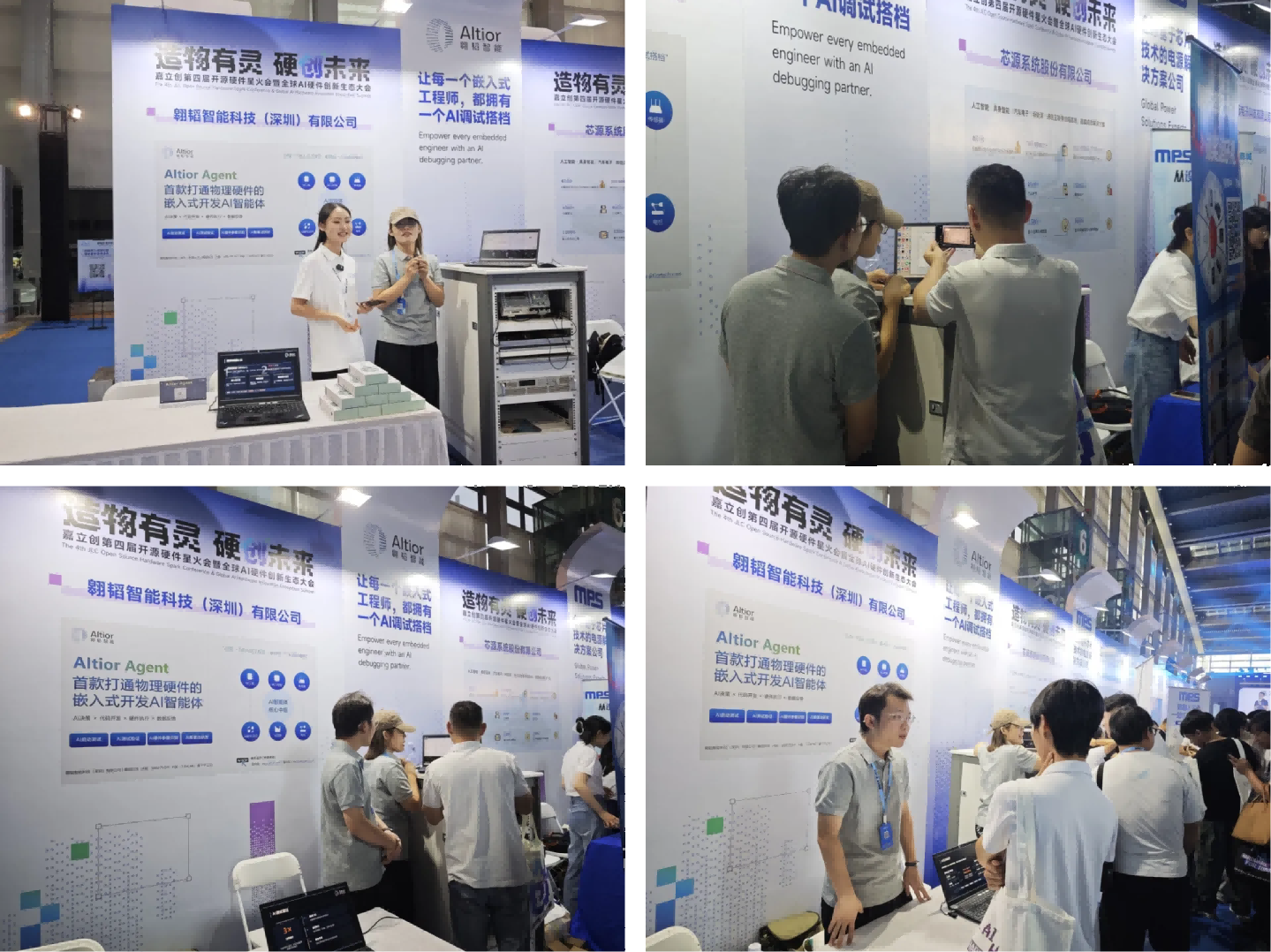
At the conference, AItior unveiled its offering, the digital employee “Xiaotao,” with a live demonstration: one click runs a workflow in which Xiaotao automatically debugs motor startup. The demo showed directly how AItior Agent closes the hardware loop and establishes a new paradigm for integrated software-and-hardware development. The technology drew a steady stream of industry practitioners and veteran embedded engineers, and the booth stayed lively throughout.
Answering questions from embedded development, motor control, and AI professionals on site, the AItior technical team gave professional, in-depth answers backed by live hardware demonstrations. Its leading technology, solutions tailored to real industry needs, and professional on-site support earned AItior wide recognition and praise from the engineers, makers, and industry peers in attendance.
R&D Is Time-Consuming and Labor-Intensive
Embedded Engineers Face a Universal Debugging Dilemma
Driven by the national “AI+” initiative and the deepening strategy of new industrialization, China's embedded, motor control, and embodied intelligence industries are entering a window of rapid growth, with new quality productive forces accelerating the digital upgrade of the hardware industry.
The industry keeps expanding, yet it faces structural gaps: a talent shortage of more than 300,000 people and a training cycle of three to five years for senior R&D talent.
For years, motor control product development has followed a rigid, outdated model, and low development efficiency is a widespread problem across the industry.
For junior engineers, getting to grips with a program architecture and tuning parameters without experience draws out the motor debugging cycle. For mid-level engineers, the heavy volume of start-stop and other tests that follow debugging consumes much of their time. For senior engineers, expertise has to be handed down again and again, and no simplified, standardized process ever takes hold.
AI can help engineers map out a program architecture, draft a functional module, and organize reference materials. Yet the AI agents on the market today generate pure software code only; they cannot connect to physical devices for real motor debugging and testing. That leaves the industry's glaring pain point: “AI writes the code, but the hardware still needs a human.”
An AI Partner That Empowers
Solving the Whole Hardware Debugging Workflow in One Click
Answering a genuine industry need and aligned with the national strategy for self-reliant, controllable software and hardware, and drawing on the deep industrial foundation of its parent company Fortior Technology (688279.SH/1304.HK) that is listed on both the A-share and H-share markets, AItior holds to its product philosophy — “every embedded engineer deserves an AI debugging partner” — and has launched AItior Agent, the industry's first embedded development AI agent that connects to physical hardware. It overturns the traditional embedded development paradigm and opens a new stage of intelligent debugging for physical hardware.
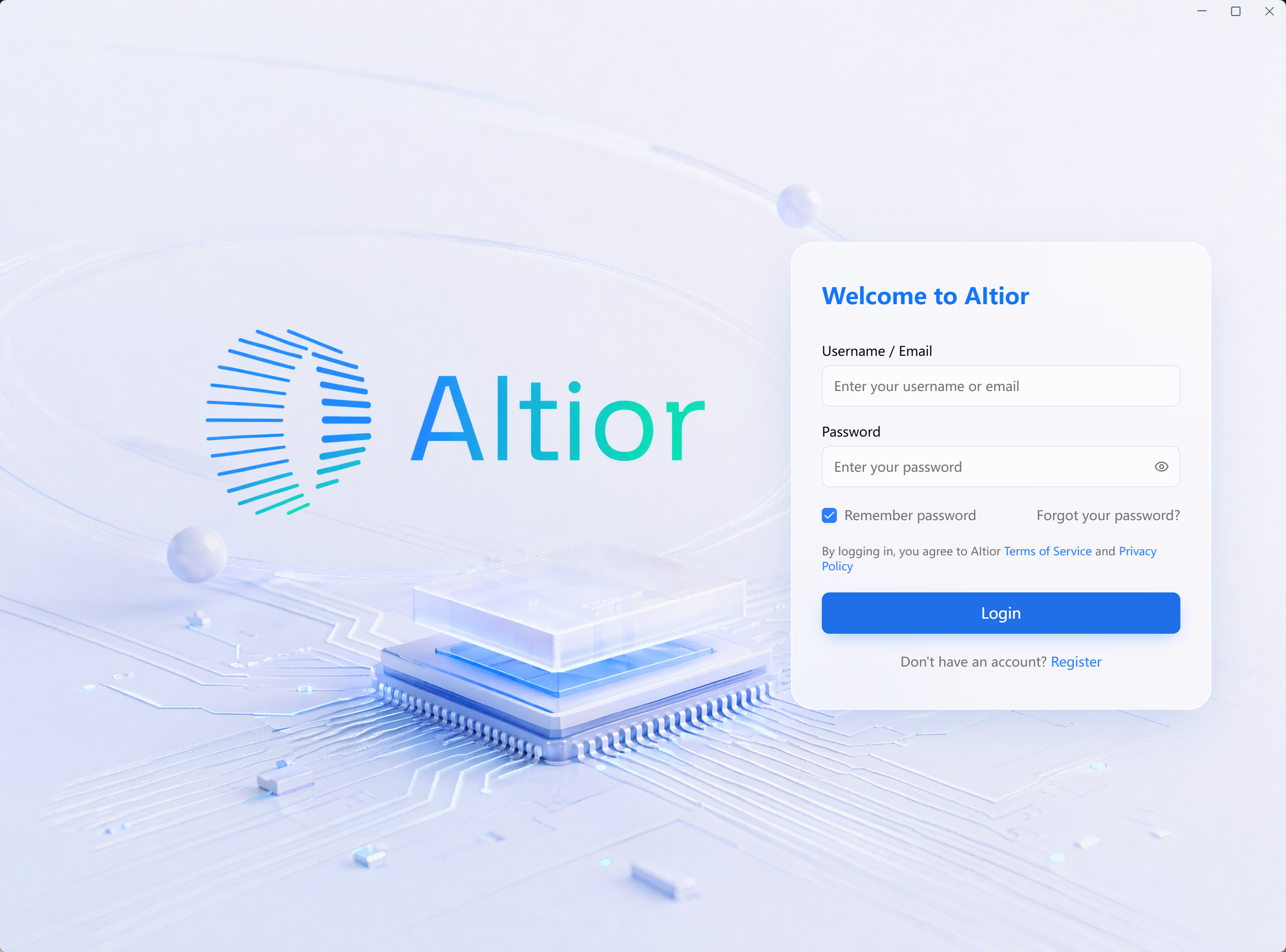
*AItior UI
Unlike general-purpose AI tools that support software coding only, AItior Agent has a built-in motor control expert knowledge base. Carrying the experience of more than 6,000 past projects and a grasp of motor control algorithm principles, it builds motor debugging and testing workflows in Workbench, making itself a more professional AI debugging partner for its users.
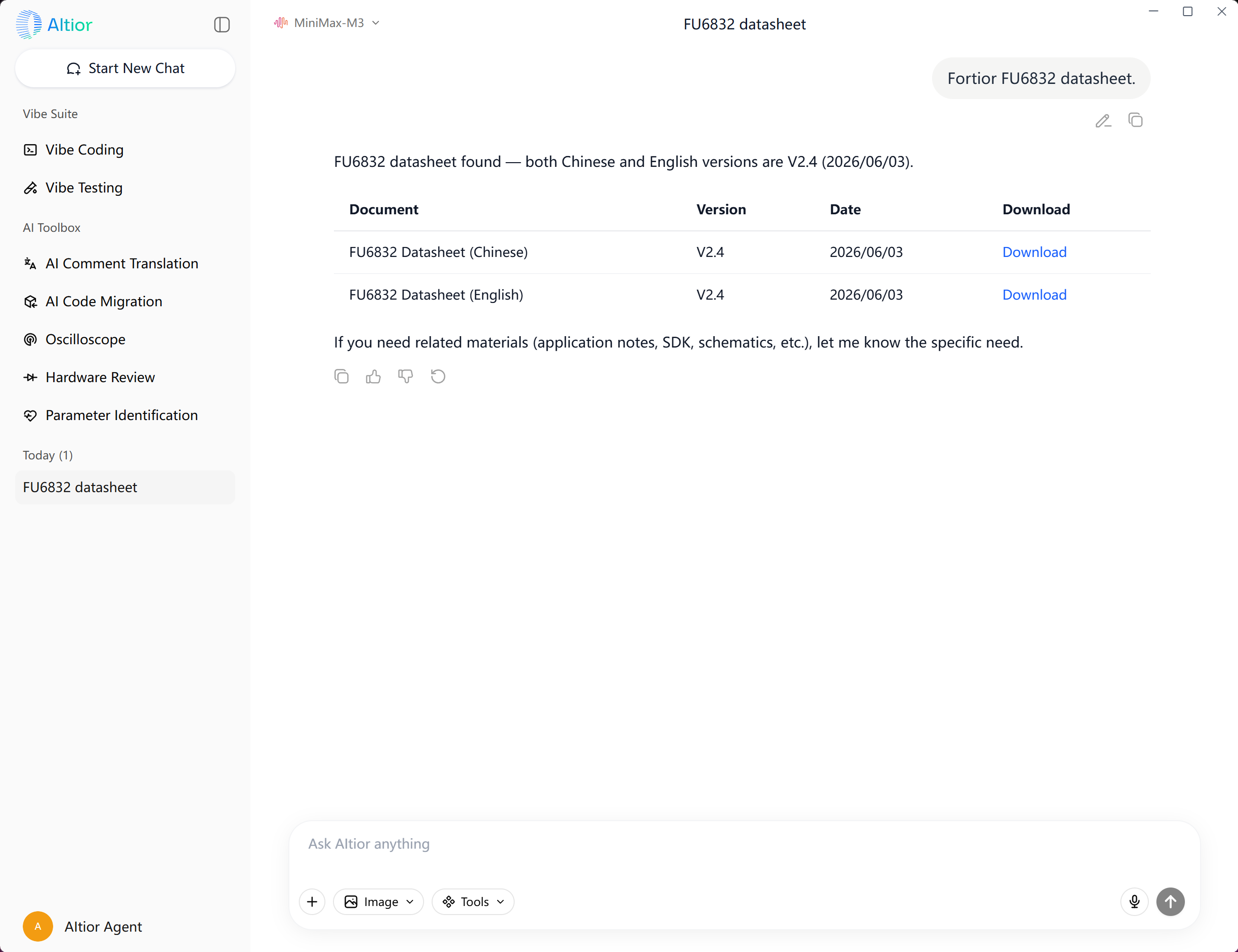
*Knowledge base
For external device connections, AItior Agent includes MCP tools. When a device is connected, the AI retrieves and executes on its own, and whether the connection succeeded is shown right in Workbench — intuitive and straightforward.
We have already connected oscilloscopes, programmable power supplies, emulators, motor driver boards, AI hardware platforms, and cameras to the hardware platform.
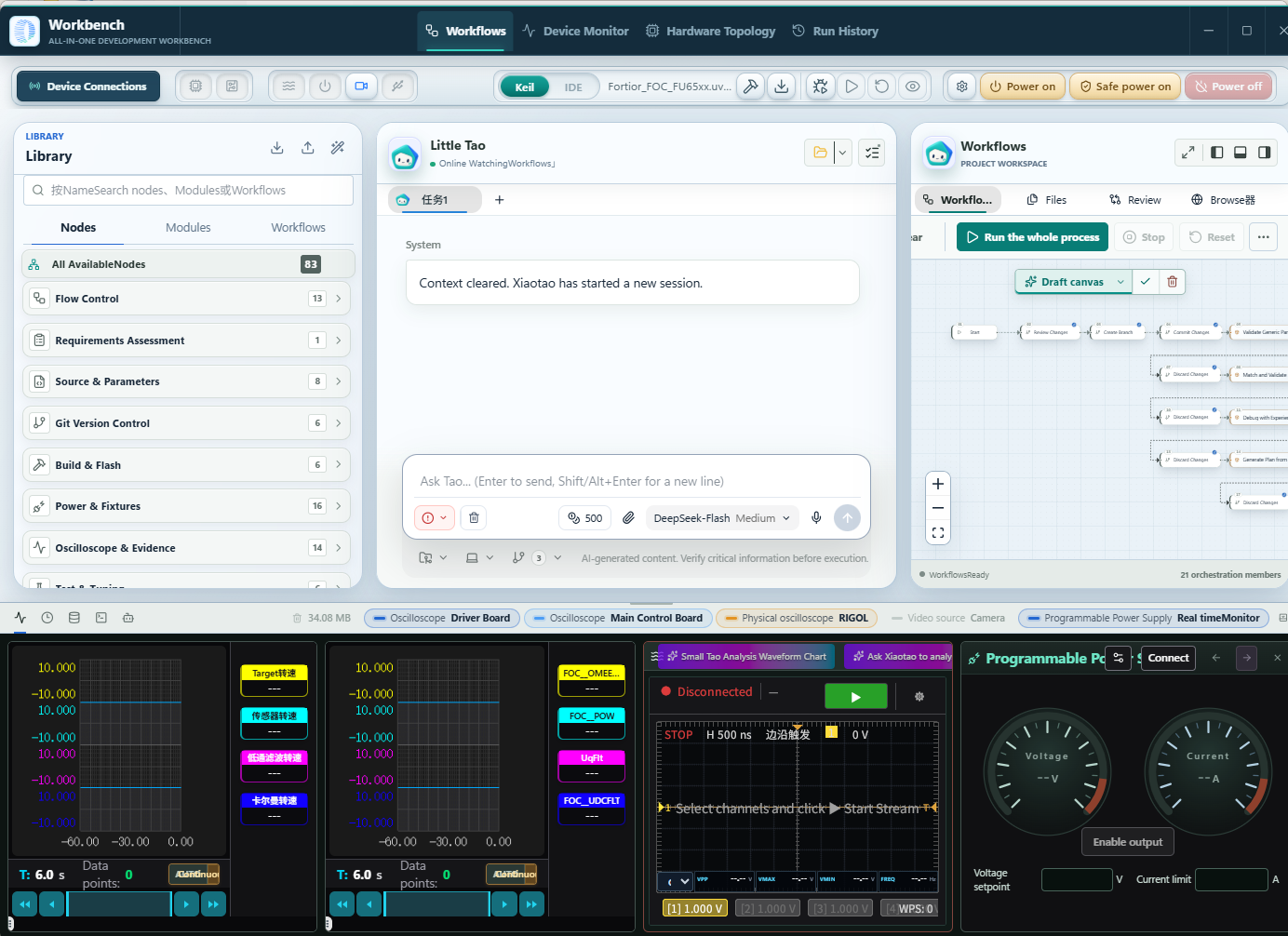
*Workbench
The product builds a continuously evolving knowledge graph dedicated to motor control, distilling core technical expertise and process know-how from years of work in FOC algorithms, sensorless control, and efficiency optimization into a distinctive vertical technology moat. It completes the entire R&D loop in one place — requirement breakdown → code generation → parameter tuning → compiling and programming → hardware validation → waveform capturing → data analysis → automated testing → report output — with no need for manual tool switching, parameter tweaking, or data handling. Motor control project development becomes a true closed loop.
Measured results show that with AItior Agent, motor startup debugging efficiency rises by 80%, full-machine test cycles are cut by more than 70%, and chip platform porting efficiency improves tenfold, easing the workload and boosting the productivity of frontline engineers, using innovation at the tooling layer to tackle the industry's talent shortfall and low R&D efficiency, and laying a tool foundation for the embedded industry's large-scale, high-quality innovation.
Bringing AItior Agent into Real-World Use
So Every Engineer Can Apply Innovation Efficiently
AItior has developed several deployment options and will launch subscription tiers at different price points to meet the needs of different customers, supporting AItior Agent's adoption across a diverse customer base.
AItior Agent is a digital employee with extensive motor control experience and integrated debugging and testing capabilities. In the course of promotion, we found that different customers have different pain points and therefore different requirements for AItior Agent.
Some customers have a complete, reliable test process, but their engineers are newcomers or come from other disciplines and are relatively weak at motor debugging; they have a stronger need for AItior Agent's automatic debugging. Others have engineers with deep motor debugging experience, but cumbersome test procedures slow them down, so they care more about AItior Agent's fully automated testing and complete test reporting.
In response to these differing needs, subscription tiers will be released on the app. We also support private deployment for enterprises, offering annual licensing, implementation, and quotation-based custom development. All of this is aimed at putting AItior Agent into real-world use, lowering the barrier to motor control development and letting every engineer apply innovation efficiently.
——————————————————————————————
Standing at a new stage of industry development, we are seizing the opportunity created by the convergence of artificial intelligence and new industrialization.
Backed by the deep technical foundation and industry chain resources of its parent company Fortior Technology, AItior will keep iterating the core technology of AItior Agent, steadily upgrade its knowledge base dynamically, and advance the development of a dedicated small model for motor control.
Looking ahead, AItior will keep sharpening the localized, intelligent, professional embedded development agent, helping more embedded innovations move from idea to reality and continuing to empower the high-quality development of China's embedded and high-end motor control industries and a self-reliant software and hardware ecosystem.