


From October 14 to 16, the WESEMiBAY Semiconductor Ecosystem Expo 2026 (WESEMiBAY for short) took place at the Shenzhen Convention and Exhibition Center in Futian District. During the show, AItior, a subsidiary of Fortior Technology (A-share: 688279.SH; H-share: 1304.HK), attended the “Chiplet, Advanced Packaging and AI Compute Chip Industrialization Forum” as an invited guest. AItior CTO Luo Xue delivered a keynote speech titled “Building a New Paradigm for Chip Embedded R&D with AI,” setting out to the industry the technical approach and practical results of using AI agents to connect physical hardware and reshape the entire chip embedded R&D workflow.
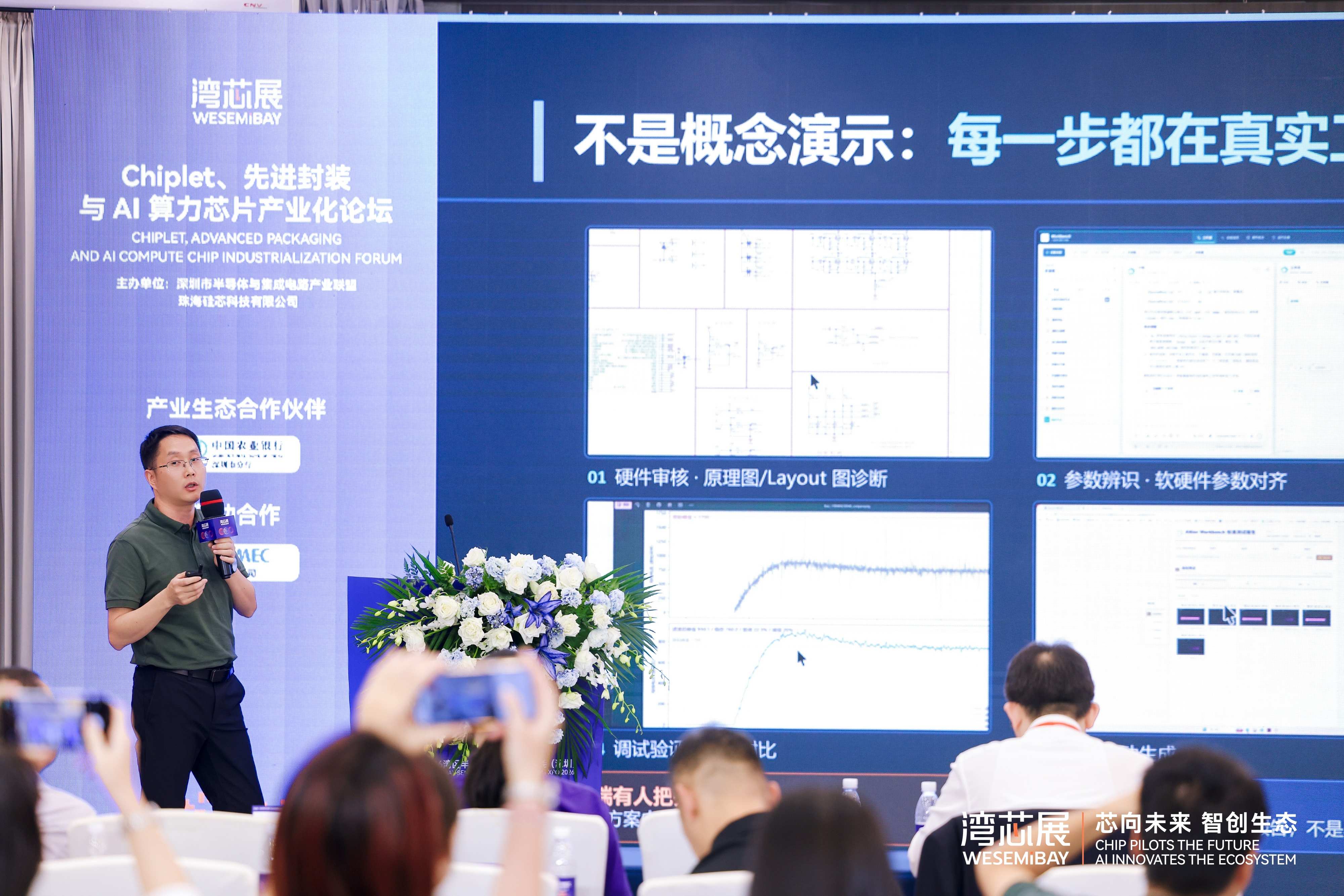
This year's WESEMiBAY, themed “Chip pilots the future; AI innovates the ecosystem,” spanned nearly 80,000 square meters and brought together more than 1,000 semiconductor companies from 22 countries and regions, along with over 40 high-profile industry forums, making it a globally influential flagship showcase for China's homegrown integrated circuit brands. The “Chiplet, Advanced Packaging and AI Compute Chip Industrialization Forum” focused on collaborative innovation in 3D IC advanced packaging, heterogeneous integration and AI computing in the post-Moore era. Luo Xue's invitation to speak reflects the industry's interest in and recognition of the company's innovative work in “AI + embedded R&D.”
In his speech, Luo Xue noted that traditional chip embedded R&D has long depended heavily on human experience: engineers write code, consult manuals, run tests, tune waveforms, and write reports, with much of their energy consumed by repetitive work, while expert knowledge is hard to accumulate and pass on. General-purpose AI, for all its coding ability, cannot connect to real hardware or to domain know-how — it “can talk but cannot do” — leaving a clear gap between AI hallucination and real engineering deployment.
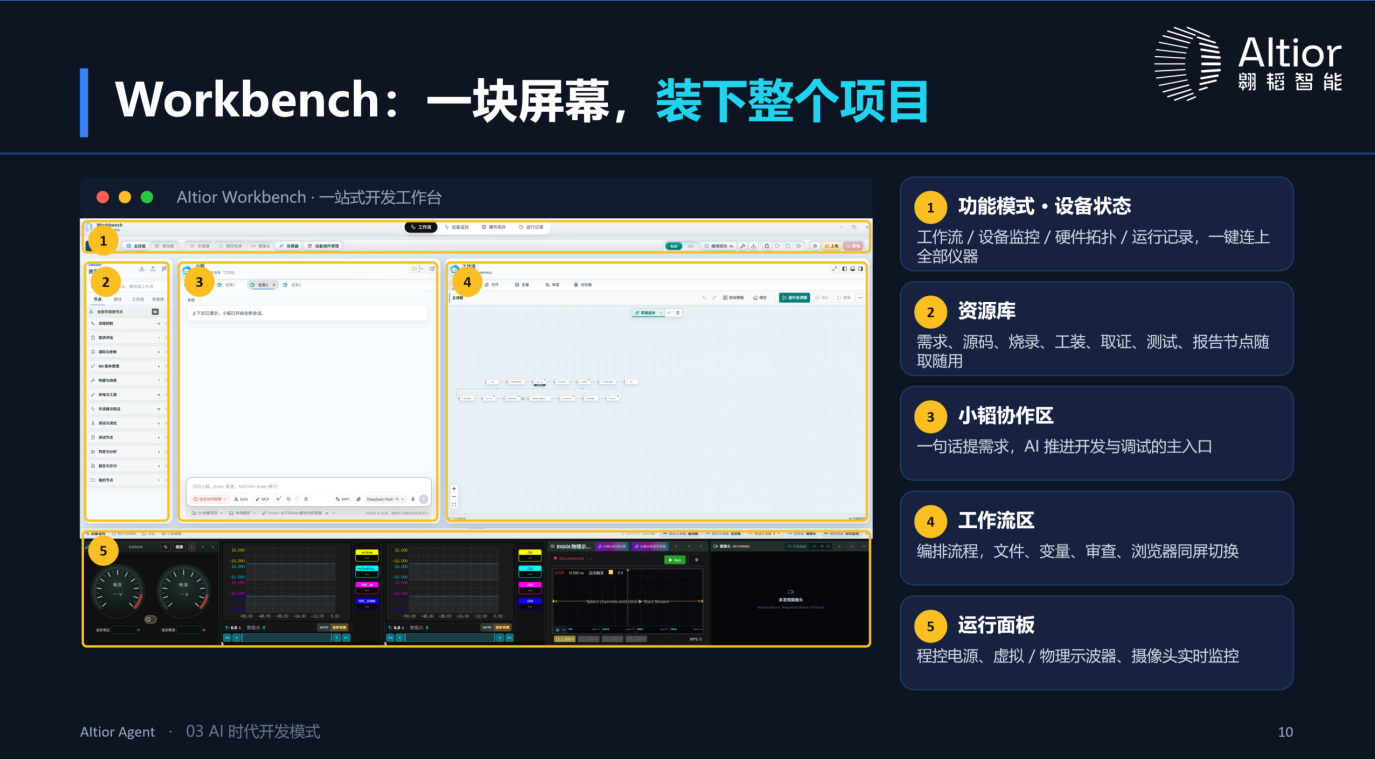
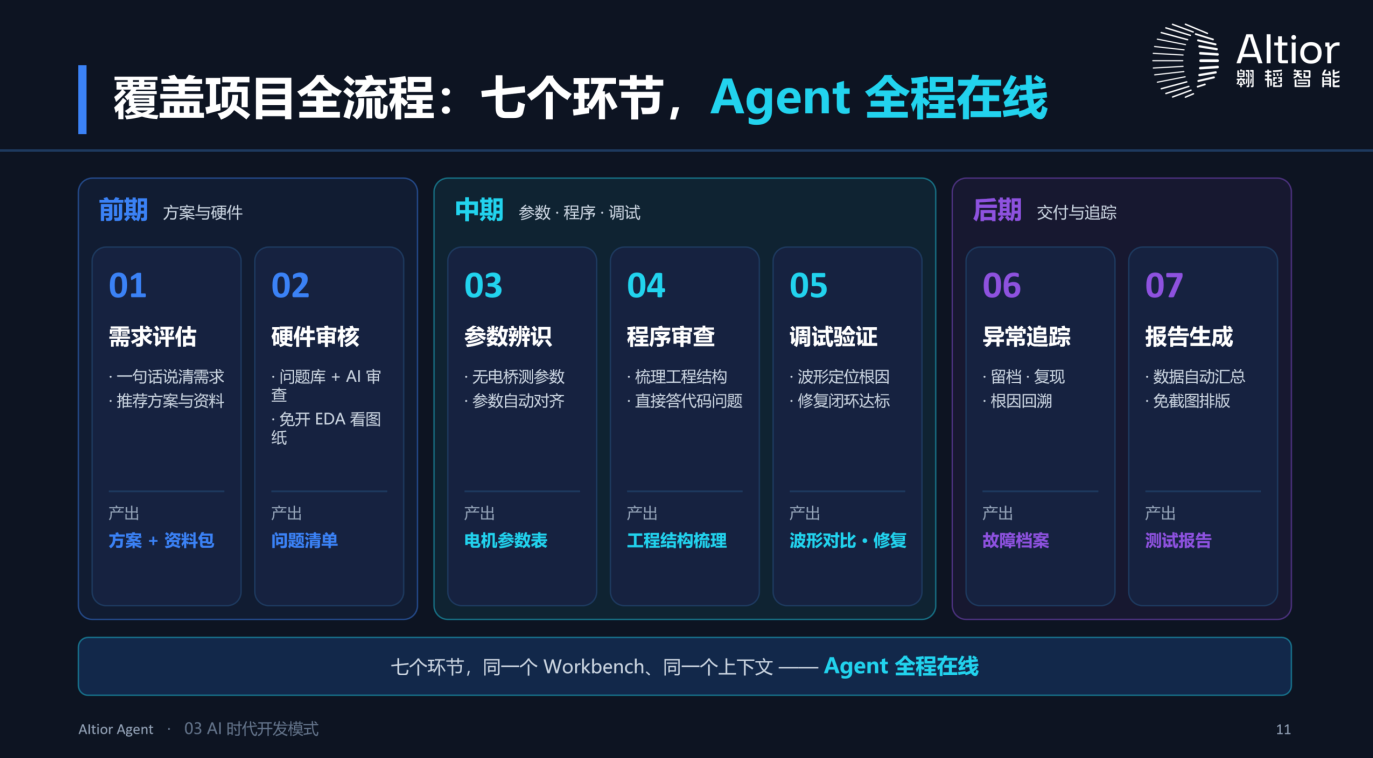
To tackle these industry pain points, AItior independently developed the AItior Agent — the industry's first embedded development AI agent that connects to physical hardware. Its one-stop Workbench puts an entire project on a single screen, linking the full R&D flow from requirements assessment, hardware review, parameter identification, program review, debugging and verification, anomaly tracking through to report generation, so that a single sentence of requirements can set a project moving on its own.
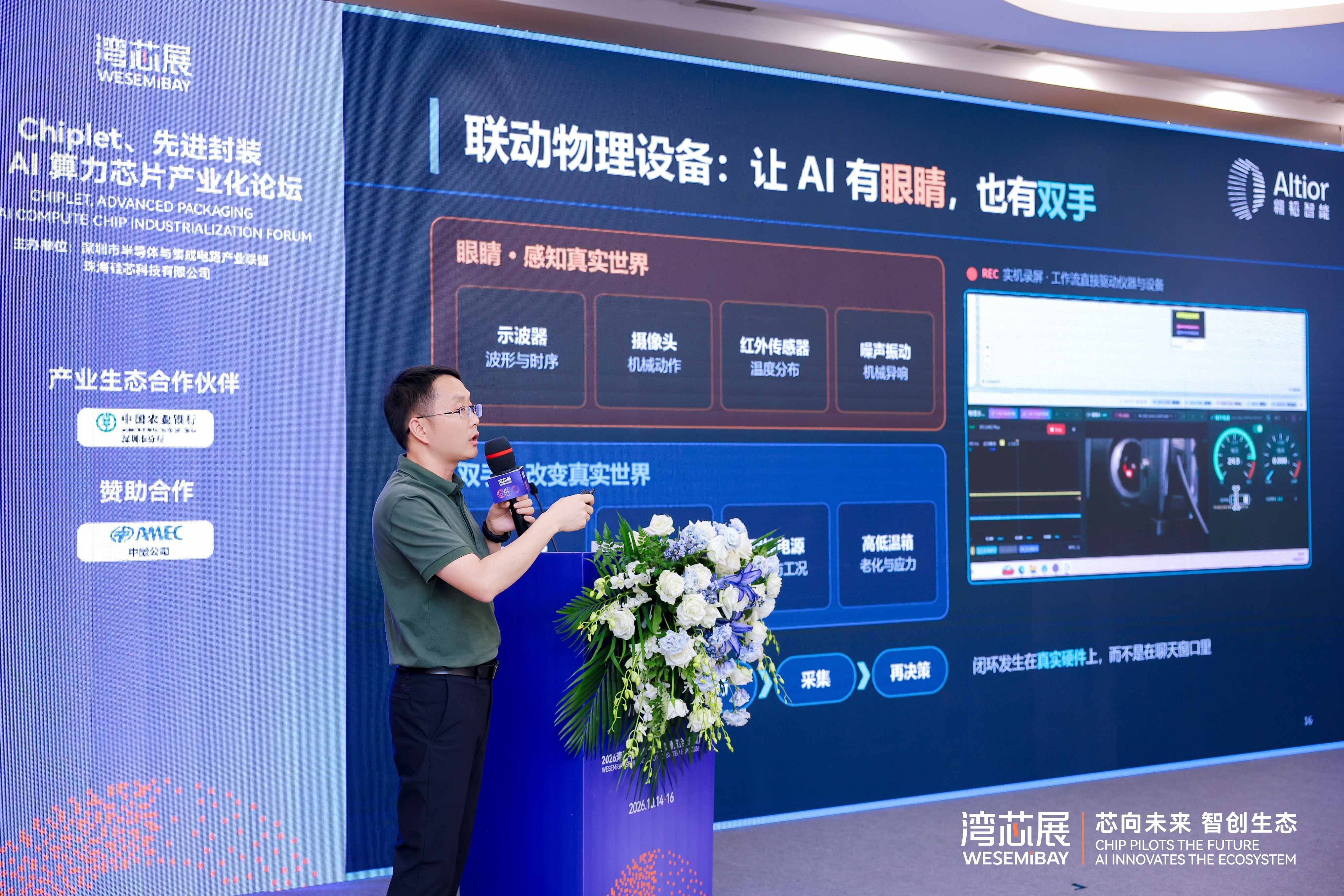
Unlike AI that stays inside a chat window, the AItior Agent perceives the physical world with “eyes” and drives real equipment with “hands” by connecting to physical devices: it senses hardware status in real time through oscilloscopes, cameras, infrared thermal imaging, and noise and vibration monitoring, and drives real devices via emulators, AI control boards, programmable power supplies and high/low temperature chambers, forming a complete closed loop of “sense → decide → act → collect → decide again.” Drawing on Fortior's knowledge base for the motor drive vertical, the AItior Agent adheres to a closed loop of theoretical root-cause analysis plus physical verification, eliminating AI hallucination at the source and steadily turning engineers' experience into reusable digital assets for the team. The platform now hosts more than 1,286 workflows verified on real hardware.
Luo Xue said that AItior is helping engineers evolve from FAE (Field Application Engineer) to FDE (Forward Deployed Engineer): one person can orchestrate multiple AI digital employees, named Xiaotao, working in parallel on coding, testing, and reporting, compressing analysis and debugging that once took days into minutes, “so that every embedded R&D engineer has an AI debugging partner.”
As a key move in Fortior's push to build new infrastructure for AI-driven R&D, AItior is committed to making AI more than a code writer — an agent that can drive real hardware. Looking ahead, Fortior Technology will continue to build on its deep expertise in motor drives and chips, firmly support AItior as it goes deeper into vertical agents for embedded R&D, and work openly with semiconductor ecosystem partners to jointly shape a new “AI + hardware” paradigm for chip R&D, contributing to the high-quality development of China's integrated circuit industry.